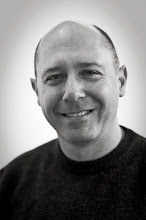
Things only amusing to academics
Yesterday we had to interview a grad student who is going to be part of our teaching fellows program. Rather than appointing a committee, I just grabbed the person who will be the mentor and the person who will be interim chair when I'm doing research next year.
Me: "So here you have the current Chair [me], next year's interim Chair, the person who will be the Chair the year after that [me], and the person who will be taking over Chair when I'm done. We're a veritable Bob's Discount Furniture of professors."
Well, I thought it was funny.
Tuesday, February 24, 2009


Wednesday, February 11, 2009
The Complete Old English Poetic Corpus is Now Online at Anglo-Saxon Aloud
After nearly two years (just ten days short of two years), 528 posts and many hours of recording and even more hours editing, every Old English poem is now recorded and on-line at this site. The posting of "Instructions for Christians" a few minutes ago thus marks the completion of my original plan for Anglo-Saxon Aloud.
If some of the statistics are accurate, there have been nearly a quarter of a million downloads from Anglo-Saxon Aloud (I find this hard to believe, actually). The Dream of the Rood seems to have been downloaded the most, at 1,900 or so times thus far, with the Wanderer next, at 1,600.
If you have just discovered this site, I encourage you not just to click on the first recording below (which is not a very good poem, if it even is a poem), but instead to listen to some of the best Anglo-Saxon poems, including The Wanderer, The Seafarer, The Dream of the Rood, selections from Beowulf, Cædmon's Hymn, and The Battle of Maldon. You can find over 100 different poems through the "category" links. If you would like to listen to the poems in both Old English and Modern English, with brief introductory discussion by me, you can buy the 2-CD set of Anglo-Saxon Aloud: Greatest Hits from the link. For complicated reasons, not all of Beowulf is on this site, but you can buy the entire poem in Old English as a 3-CD set at Beowulf Aloud.
I am extremely gratified by all of the feedback I have received on this project. I have learned an immense amount about Old English poetry by doing it and have also had a great deal of fun. And at the times when I wondered why I was spending yet another Thursday morning recording a week's worth of posts, or when I was editing out the ten millionth loud breath or too-long pause, knowing that people were listening to me in Russia and Taiwan and Japan and Chile and Australia and South Africa was a great motivator. I am particularly encouraged that so many people have emailed to say that they have used the site for their classes.
A word about my pronunciation. I was trained to speak Old English by John Miles Foley at the University of Missouri-Columbia. He in turn was trained by Robert Creed. Professor Foley also worked with Benjamin Bagby on his pronunciation, so a great deal of the recorded Old English in the world goes back to John and to Bob Creed. But although there are good reasons for thinking that the way we pronounce Old English is close to the original pronunciation, I do want to note that there are different "schools" and accents of Old English. I definitely slip into American pronunciation of vowels on occasion, and those taught by different teachers will pronounce Old English in subtly (and less subtly) different ways. Such is the nature of language: it always changes from speaker to speaker, from time to time. I do not know what Anglo-Saxon native speakers, presented with the poems on this site, would think. Perhaps they would think it barbarous, but I am hopeful that they would recognize at least a little of the beauty of their poetry.
In an early exercise in Bright's Old English Grammar, the text from which I learned Old English, the "Learning-Maiden" says: "ðeah þe we ne mægen hieran ussera ealdfædera stefna, þeahhwæðere magon we rædan heora word, þa þe ða boceras gewriten habbað." (Although we may not hear our ancestors' voices, we nevertheless may read their words, those that the writers have written). We can never bring back the voices of those long gone, but, through centuries of patient scholarship, effective training and new technology, we can recapture at least an idea, an echo of what those voices might have been. I hope I have accomplished that, to a very small degree, here.
I am done with the poetry, and will be taking a short break from recording, but I am not done with Anglo-Saxon Aloud. 30,000 lines of poetry took 2 years. 300,000 lines of prose would then, theoretically, take 20, and I am not making that kind of a commitment right now (and it would in any event be longer, because prose has more words per line). My next step will either be The Anglo-Saxon Chronicle or Wulfstan's Sermo Lupi, but I have not decided yet. I'll also be doing some housekeeping, fixing tags, adding explanations, etc., here (so let me know if you find errors) and I hope to work with Aaron Hostetter, who has created the incredibly valuable Anglo-Saxon Narrative Poetry project) to link together translations with the recordings. At some point I will offer for sale (in case you don't want to spend a year downloading) the entire corpus on a jump drive, iPod shuffle, or set of DVDs or CDs, but that is in the further future.
Again, thanks very, very much for your support over the past two years. Enjoy the poetry. Learn the language. Wes þu hal
After nearly two years (just ten days short of two years), 528 posts and many hours of recording and even more hours editing, every Old English poem is now recorded and on-line at this site. The posting of "Instructions for Christians" a few minutes ago thus marks the completion of my original plan for Anglo-Saxon Aloud.
If some of the statistics are accurate, there have been nearly a quarter of a million downloads from Anglo-Saxon Aloud (I find this hard to believe, actually). The Dream of the Rood seems to have been downloaded the most, at 1,900 or so times thus far, with the Wanderer next, at 1,600.
If you have just discovered this site, I encourage you not just to click on the first recording below (which is not a very good poem, if it even is a poem), but instead to listen to some of the best Anglo-Saxon poems, including The Wanderer, The Seafarer, The Dream of the Rood, selections from Beowulf, Cædmon's Hymn, and The Battle of Maldon. You can find over 100 different poems through the "category" links. If you would like to listen to the poems in both Old English and Modern English, with brief introductory discussion by me, you can buy the 2-CD set of Anglo-Saxon Aloud: Greatest Hits from the link. For complicated reasons, not all of Beowulf is on this site, but you can buy the entire poem in Old English as a 3-CD set at Beowulf Aloud.
I am extremely gratified by all of the feedback I have received on this project. I have learned an immense amount about Old English poetry by doing it and have also had a great deal of fun. And at the times when I wondered why I was spending yet another Thursday morning recording a week's worth of posts, or when I was editing out the ten millionth loud breath or too-long pause, knowing that people were listening to me in Russia and Taiwan and Japan and Chile and Australia and South Africa was a great motivator. I am particularly encouraged that so many people have emailed to say that they have used the site for their classes.
A word about my pronunciation. I was trained to speak Old English by John Miles Foley at the University of Missouri-Columbia. He in turn was trained by Robert Creed. Professor Foley also worked with Benjamin Bagby on his pronunciation, so a great deal of the recorded Old English in the world goes back to John and to Bob Creed. But although there are good reasons for thinking that the way we pronounce Old English is close to the original pronunciation, I do want to note that there are different "schools" and accents of Old English. I definitely slip into American pronunciation of vowels on occasion, and those taught by different teachers will pronounce Old English in subtly (and less subtly) different ways. Such is the nature of language: it always changes from speaker to speaker, from time to time. I do not know what Anglo-Saxon native speakers, presented with the poems on this site, would think. Perhaps they would think it barbarous, but I am hopeful that they would recognize at least a little of the beauty of their poetry.
In an early exercise in Bright's Old English Grammar, the text from which I learned Old English, the "Learning-Maiden" says: "ðeah þe we ne mægen hieran ussera ealdfædera stefna, þeahhwæðere magon we rædan heora word, þa þe ða boceras gewriten habbað." (Although we may not hear our ancestors' voices, we nevertheless may read their words, those that the writers have written). We can never bring back the voices of those long gone, but, through centuries of patient scholarship, effective training and new technology, we can recapture at least an idea, an echo of what those voices might have been. I hope I have accomplished that, to a very small degree, here.
I am done with the poetry, and will be taking a short break from recording, but I am not done with Anglo-Saxon Aloud. 30,000 lines of poetry took 2 years. 300,000 lines of prose would then, theoretically, take 20, and I am not making that kind of a commitment right now (and it would in any event be longer, because prose has more words per line). My next step will either be The Anglo-Saxon Chronicle or Wulfstan's Sermo Lupi, but I have not decided yet. I'll also be doing some housekeeping, fixing tags, adding explanations, etc., here (so let me know if you find errors) and I hope to work with Aaron Hostetter, who has created the incredibly valuable Anglo-Saxon Narrative Poetry project) to link together translations with the recordings. At some point I will offer for sale (in case you don't want to spend a year downloading) the entire corpus on a jump drive, iPod shuffle, or set of DVDs or CDs, but that is in the further future.
Again, thanks very, very much for your support over the past two years. Enjoy the poetry. Learn the language. Wes þu hal
Monday, February 09, 2009
The World We Now Live In
Yesterday my son and daughter were playing at being wolves. My son was the baby wolf and my daughter was the mommy wolf, and they were crawling around the house, howling, attacking stuffed animals, etc.
Yesterday my son and daughter were playing at being wolves. My son was the baby wolf and my daughter was the mommy wolf, and they were crawling around the house, howling, attacking stuffed animals, etc.
Daughter: Ok, Baby. Now you go into your den and stay there and be safe until Mama catches the moose. Then you can come out and join Mama.
Son: How will I know when you've caught the moose, Mama?
Daughter: Mama will text you.
Wednesday, February 04, 2009
A Remarkable Life
Sadly, Holcombe passed away in 2003 at the age of 97, and a few days ago Ethelind also died, either at 100 or just shy of making her century.
Below I've pasted in Ethelind's obituary from the Denver Post. What a remarkable life!
When I first came to Wheaton, I met Professor Emeritus Holcombe Austin, who was a retired Philosophy professor and also an expert on trees. He and his wife Ethelind were fixtures on the Wheaton campus, and I remember chatting with him at lunch when I was a brand-new assistant professor. He was a fascinating and very kind person.
Sadly, Holcombe passed away in 2003 at the age of 97, and a few days ago Ethelind also died, either at 100 or just shy of making her century.
Below I've pasted in Ethelind's obituary from the Denver Post. What a remarkable life!
ETHELIND ELBERT AUSTIN
1909-2009
Ethelind Elbert Austin, the grandniece of Colorado territorial governor Samuel Elbert--for whom Mount Elbert is named--and the great-grandniece-in-law of territorial governor John Evans--for whom Mount Evans is named--died at her home in Aurora on January 28.
A skilled and avid horsewoman, she rode in 1917 at the age of 8 to the top of Mount Evans, long before the road to the peak was built. It was a 16-hour single-day round trip, starting by moonlight at 3 a.m. for an ascent of some 7000 feet from the family ranch in upper Bear Creek Canyon. When the ride was over, she later recalled almost falling asleep face first into her soup.
She was a raconteur of early Colorado history and in her 90's sometimes told historical anecdotes ("The Story of Deadeye Dick" was a favorite) at events in Denver at the Byers-Evans House museum, which she visited as a little girl when the family of territorial governor John Evans was still living in the house.
She was born in Des Moines, Iowa, grew up on a family farm, and by age 16 had the ambition of becoming the nation's first female competitive racing jockey, but instead she enrolled as a student in Radcliffe College, in Cambridge, MA, where she graduated with honors in Romance languages in 1930 and where she met a graduate student in philosophy from Texas named Holcombe Austin. They were married in 1933. He taught philosophy at Harvard College, Scripps College in California, and for most of his career he was professor of philosophy at Wheaton College, in Norton, MA, where she was a librarian at the college.
After retirement in 1970, they spent each summer at the family ranch in upper Bear Creek Canyon, where she rode nearly daily through age 98 and was the acknowledged local expert on the canyon's trails.
She is survived by three children. John Austin, M.D., is a professor of radiology at Columbia University in New York City, David Austin is former principal cellist of the New Haven and Hartford, CT, symphony orchestras and a businessman in Hoonah, AK, and Sue Austin Ricketts, Ph.D., is a demographer for the Colorado Department of Public Health and Environment and lives in Denver. She is survived also by 8 grandchildren and 13 great-grandchildren.
Thursday, January 29, 2009
My Latest Course on CD is out
A Way with Words IV: Understanding Poetry

A Way with Words IV: Understanding Poetry
I recorded this course months ago, but it take a while for editing, post-production, writing the course book and then having a designer make it look good...
But it's out now. So if you want to hear me talk about poetry (and really, who doesn't?), you can get the course directly from Recorded books and listen to me make fun of the emo parts of "Ode to the West Wind." The other courses in the series are also available from Recorded Books and from audible.com.
(Joking aside, I'm pretty happy with the way the course came out. I recorded another one, The Anglo-Saxon World, in December and that should be out in the early spring).
Anglo-Saxon Aloud wins an award.
Thank you!
Over at The Ruminate, Larry Swain created the PEAA Awards (Praemium Ephemeridis Aetheriae Auctoribus awards [Award for Authors of Ethereal Diaries]), and he recently announced that Anglo-Saxon Aloud won for Best Podcast on Medieval Subject.
This award is incredibly gratifying, because it comes from the people who know best (the medievalist blogging community), and I really appreciate the award and Larry's putting together the whole thing.
Of course it is a little ironic that I got the award just as I got too much of a cold to effectively finish up the poetry. The entire ASPR is recorded and posted, but there are a few other short poems (well, except Instructions for Christians, which is a beast). As soon as my voice no longer sounds like I have smallish bees up my nose, I'll finish that up and then try some prose.
So thanks to Larry, to those who voted for Anglo-Saxon Aloud, and most importantly, for those who listen to Anglo-Saxon Aloud. Knowing that there are listeners, all over the world it turns out, has been the biggest motivator for my keeping up with the project, and the project itself has taught me an enormous amount about Anglo-Saxon poetry.
(Larry, you can just email me for the mailing address for my statuette since Nokes already claimed the whole 1.4 million dollar check...)
Thank you!
Over at The Ruminate, Larry Swain created the PEAA Awards (Praemium Ephemeridis Aetheriae Auctoribus awards [Award for Authors of Ethereal Diaries]), and he recently announced that Anglo-Saxon Aloud won for Best Podcast on Medieval Subject.
This award is incredibly gratifying, because it comes from the people who know best (the medievalist blogging community), and I really appreciate the award and Larry's putting together the whole thing.
Of course it is a little ironic that I got the award just as I got too much of a cold to effectively finish up the poetry. The entire ASPR is recorded and posted, but there are a few other short poems (well, except Instructions for Christians, which is a beast). As soon as my voice no longer sounds like I have smallish bees up my nose, I'll finish that up and then try some prose.
So thanks to Larry, to those who voted for Anglo-Saxon Aloud, and most importantly, for those who listen to Anglo-Saxon Aloud. Knowing that there are listeners, all over the world it turns out, has been the biggest motivator for my keeping up with the project, and the project itself has taught me an enormous amount about Anglo-Saxon poetry.
(Larry, you can just email me for the mailing address for my statuette since Nokes already claimed the whole 1.4 million dollar check...)
Monday, January 26, 2009

Hippos Go Berserk is a Forgery!
The following information is so explosive that I just couldn't wait for the Speculum article to come out.
I have evidence that Hippos Go Berserk, allegedly by Sandra Boynton, is likely a crude forgery that has duped generations of scholars. A close-minded critical establishment dominated by a line of Oxford and Cambridge Professors has refused to acknowledge that Hippos Go Berserk contains inconsistencies that the real Sandra Boynton would never have included in a work.
I draw your attention in particular to the point of the story where the Hippos have already gone berserk and are leaving the party. "Hippos" states:
Seven hippos heading west
Leave six hippos quite distressed.
Five hippos then set forth
With four hippos headed north.
Three hippos say 'good day.'
The last two hippos go their way.
One hippo, alone once more, misses the other forty-four.
See it? See the problem? The six hippos who were quite distressed NEVER LEFT. They are still there. So the final hippo is NOT alone, missing the other forty-four: He's with six hippos, and the seven of them are (perhaps) missing the other thirty-eight hippos.
If the version we have of Hippos Go Berserk were actually by Sandra Boynton, this inconsistency would never have occurred. Therefore Hippos Go Berserk is a later forgery, not actually by the great Boynton, and thus the entire edifice of scholarship built upon the assumption that Hippos Go Berserk is genuine needs to be demolished.
The "six hippos who never leave" inconsistency and others (for example: the fuzzy blue animal at the beginning of the book is at one point called "a guest" and at another, "a beast") suggest a writer who is trying to imitate Boynton from a different point in time. We will, to be cautious, call this writer Pseudo-Boynton, but it is likely that the forger is the only writer of the tenth century who had the ability even to attempt to forge Boynton's unique style. The true author of our version of Hippos Go Berserk is thus none other than . . . Byrhtferth of Ramsey!
Thursday, January 22, 2009
Sheep DNA and Manuscripts (Again)
I meant to blog about this last week, but I had to get a lot of other stuff finished before the semester started.
Recently a research group at Johns Hopkins announced some results at getting DNA out of manuscripts. Jonathan Jarrett blogged about it here.
This isn't my crazy Sheep DNA project, which got started back in 2005 after Scott McLemee sent around a meme on Inside Higer Ed and I responded.
I may have spread the idea to the internet in 2005, but it was not mine, originally. Greg Rose came up with it in a conversation with me in the fall of 2001 (though of course he may have thought of it earlier). And other people seem to have had the idea independently. Supposedly (though I can no longer find the link), a group at Cambridge tried to sequence the DNA out of some manuscripts in the Parker Library.
In 2007 I was able to get some funding for the project, which is why I was able to get started and give a report here. With Prof. Barbara Brennessel (my co-author in the Anglo-Saxon medicine paper) and our student, Amanda Shorette, we started laying the foundation for the project. I taught Amanda paleography so that she could understand the ways that humanistic researchers work, and she researched and then taught me about DNA extraction and PCR (Polymerase Chain Reaction) amplification of DNA.
Amanda did a lot of very good research to show what we could and could not do with ovine DNA. Then this fall another student, Jay Korzun, was able to extract DNA from a fragment of manuscript. We didn't go to press or publicize this yet because we have been consistently worried about cross-contamination and are trying to rule that out, but it seems we are basically at the same place as the Hopkins group.
Here's the problem, which, word has it, the Cambridge group also ran into: when you have about 1000 years worth of touching and rubbing along the edges of books, you end up with a lot of DNA cross-contamination, not just from human DNA that has rubbed off (which you can rule out by using different primers), but from the various leaves bound together in the manuscript (for example, if someone touches leaf 42r and then touches leaf 45v, particles of DNA from one can be transferred to the other). Again, rumor has it that the Cambridge group concluded that you would have to cut out a few square centimeters out of the middle of each leaf in order to avoid contamination as much as possible. Librarians were not enthusiastic.
All these problems don't make the project impossible (maybe), just very difficult. I have been working on a patent application for a process/device to get samples in a non-destructive manner (i.e., get microscopic samples; there is no non-destructive way to get DNA out of a manuscript -- swabbing doesn't get you enough, we learned), but even if that works (and working on it as a patent isn't meant to keep anyone from using it; it's meant to keep anyone else from patenting it and then stopping me from using it), we will still have a very, very messy data set.
But, as I've learned from the lexomics project, messy data can be dealt with if there is enough of it. So the key is to get data from a huge number of manuscript leaves and try to weed out the cross-contamination. To that end, we've concluded that we're going to need to take a bioinformatic approach, and figure out as much of the ACTG etc. coding of the DNA we extract. Then all of those codes, as fragmentary or complete as they are, go into a massive database, to which other researchers can contribute. Eventually we will be able to start building some phylogenetic trees.
So, to those who've asked: no, I'm not upset at the Hopkins group, who almost certainly came to the idea independently. The only way this will ever give us interesting results (i.e., Fred the Sheep gave his life for the Beowulf manuscript and look, part of Fred is in the Blickling homily manuscript also; or Fred's cousin Violet is in this Malmesbury charter...) is if a very large number of researchers and groups gather data over a long period of time, so there more people working, the better.
I meant to blog about this last week, but I had to get a lot of other stuff finished before the semester started.
Recently a research group at Johns Hopkins announced some results at getting DNA out of manuscripts. Jonathan Jarrett blogged about it here.
This isn't my crazy Sheep DNA project, which got started back in 2005 after Scott McLemee sent around a meme on Inside Higer Ed and I responded.
I may have spread the idea to the internet in 2005, but it was not mine, originally. Greg Rose came up with it in a conversation with me in the fall of 2001 (though of course he may have thought of it earlier). And other people seem to have had the idea independently. Supposedly (though I can no longer find the link), a group at Cambridge tried to sequence the DNA out of some manuscripts in the Parker Library.
In 2007 I was able to get some funding for the project, which is why I was able to get started and give a report here. With Prof. Barbara Brennessel (my co-author in the Anglo-Saxon medicine paper) and our student, Amanda Shorette, we started laying the foundation for the project. I taught Amanda paleography so that she could understand the ways that humanistic researchers work, and she researched and then taught me about DNA extraction and PCR (Polymerase Chain Reaction) amplification of DNA.
Amanda did a lot of very good research to show what we could and could not do with ovine DNA. Then this fall another student, Jay Korzun, was able to extract DNA from a fragment of manuscript. We didn't go to press or publicize this yet because we have been consistently worried about cross-contamination and are trying to rule that out, but it seems we are basically at the same place as the Hopkins group.
Here's the problem, which, word has it, the Cambridge group also ran into: when you have about 1000 years worth of touching and rubbing along the edges of books, you end up with a lot of DNA cross-contamination, not just from human DNA that has rubbed off (which you can rule out by using different primers), but from the various leaves bound together in the manuscript (for example, if someone touches leaf 42r and then touches leaf 45v, particles of DNA from one can be transferred to the other). Again, rumor has it that the Cambridge group concluded that you would have to cut out a few square centimeters out of the middle of each leaf in order to avoid contamination as much as possible. Librarians were not enthusiastic.
All these problems don't make the project impossible (maybe), just very difficult. I have been working on a patent application for a process/device to get samples in a non-destructive manner (i.e., get microscopic samples; there is no non-destructive way to get DNA out of a manuscript -- swabbing doesn't get you enough, we learned), but even if that works (and working on it as a patent isn't meant to keep anyone from using it; it's meant to keep anyone else from patenting it and then stopping me from using it), we will still have a very, very messy data set.
But, as I've learned from the lexomics project, messy data can be dealt with if there is enough of it. So the key is to get data from a huge number of manuscript leaves and try to weed out the cross-contamination. To that end, we've concluded that we're going to need to take a bioinformatic approach, and figure out as much of the ACTG etc. coding of the DNA we extract. Then all of those codes, as fragmentary or complete as they are, go into a massive database, to which other researchers can contribute. Eventually we will be able to start building some phylogenetic trees.
So, to those who've asked: no, I'm not upset at the Hopkins group, who almost certainly came to the idea independently. The only way this will ever give us interesting results (i.e., Fred the Sheep gave his life for the Beowulf manuscript and look, part of Fred is in the Blickling homily manuscript also; or Fred's cousin Violet is in this Malmesbury charter...) is if a very large number of researchers and groups gather data over a long period of time, so there more people working, the better.
Beowulf Aloud is Back!
(in stock, that is).
The studio had told me that it would only take two weeks, but it was more like a month (the holidays probably did get in the way a bit), but now I have copies of Beowulf Aloud in stock again ("the Tickle Me Elmo of 2008").
If you'd like to have your own personal copy of the 3-CD set of the greatest poem in Old English, filled with monster fights, dynastic politics and, most importantly, beautiful poetry, you can order it here.
Cost: $20.00 USD + packing and shipping ($5.00 for domestic US)
or use PayPal Button below (for domestic US shipping only; contact me m drout at wheaton ma dot edu for information about overseas shipping).
(in stock, that is).
The studio had told me that it would only take two weeks, but it was more like a month (the holidays probably did get in the way a bit), but now I have copies of Beowulf Aloud in stock again ("the Tickle Me Elmo of 2008").
If you'd like to have your own personal copy of the 3-CD set of the greatest poem in Old English, filled with monster fights, dynastic politics and, most importantly, beautiful poetry, you can order it here.
Cost: $20.00 USD + packing and shipping ($5.00 for domestic US)
or use PayPal Button below (for domestic US shipping only; contact me m drout at wheaton ma dot edu for information about overseas shipping).
Wednesday, January 14, 2009
Sometimes I think I live in a different world...
This is a paraphrase of a conversation at a meeting.
Background: Wheaton has arranged for a sophomore January experience. Sophomores come two days early and do some stuff. This happens to be on the day of the inauguration, so the planners decided that all the sophomores could be brought to the field house where they would watch the ceremony on a giant screen.
[Clarification: I am not suggesting that watching the inauguration is creepy. It's a major national event and it makes sense for people to watch it (although I was too busy working, I may watch the speech on YouTube later). I am creeped out by the leadership of the college putting together a program where students are pressured to go to watch a piece of political theater on a giant telescreen in a gymnasium. And I thought it amusing that a group of Ph.D.s didn't immediately spot the Orwellian imagery.
My only political comment, since I didn't vote for President Obama or his opponent or his predecessor, or his predecessor's predecessor, or his predecessor (this wasn't just a joke) is that it is more important to be skeptical, cynical and on your guard when your guy wins the election than when the other guy does (Likewise, you should read Dune Messiah and not just stop with Dune). My colleagues were very effective at being critical of the rhetoric, etc., of the previous administration. They should keep up the good work.
Everyone needs to practice good memetic hygiene! Keep your mind your own.]
This is a paraphrase of a conversation at a meeting.
Background: Wheaton has arranged for a sophomore January experience. Sophomores come two days early and do some stuff. This happens to be on the day of the inauguration, so the planners decided that all the sophomores could be brought to the field house where they would watch the ceremony on a giant screen.
Drout: (as tactful and politically savvy as I always am): I'm just glad I never had to participate in such a creepy experience when I was in college.
X: (confused): Why would you call it creepy?
Drout: You are rounding up a large group of people and forcing them to watch political theater. On a giant screen. In a gymnasium.
[Long pause while people look uncomfortable.]
Drout: It never occurred to any of you who planned this that it was the slightest bit creepy, did it?
X: The way you describe it makes it sound creepy. It is a major event that most people will want to watch.
Drout: Couldn't they watch it without being herded together into a gymnasium? Maybe hang out with their friends, watch it on the various lounge TVs? Make comments?
X: But then there wouldn't be the bonding experience.
Drout: Bonding over a political spectacle is, in your view, a good thing?
[another uncomfortable pause]
X: Maybe you should be one of the faculty members afterwards who can give talks to contextualize the event. You could analyze the rhetoric.
Drout: I'm pretty sure I don't want the students to see me as part of the creepy event.
X: But you'd have a chance to express your point of view.
Drout: But you've got my entire point of view. I think it's creepy.
X: (Gives up in exasperation).
[Clarification: I am not suggesting that watching the inauguration is creepy. It's a major national event and it makes sense for people to watch it (although I was too busy working, I may watch the speech on YouTube later). I am creeped out by the leadership of the college putting together a program where students are pressured to go to watch a piece of political theater on a giant telescreen in a gymnasium. And I thought it amusing that a group of Ph.D.s didn't immediately spot the Orwellian imagery.
My only political comment, since I didn't vote for President Obama or his opponent or his predecessor, or his predecessor's predecessor, or his predecessor (this wasn't just a joke) is that it is more important to be skeptical, cynical and on your guard when your guy wins the election than when the other guy does (Likewise, you should read Dune Messiah and not just stop with Dune). My colleagues were very effective at being critical of the rhetoric, etc., of the previous administration. They should keep up the good work.
Everyone needs to practice good memetic hygiene! Keep your mind your own.]
Friday, January 09, 2009
Alleluia! The Psalms are Done!
The Anglo-Saxon Poetic Records are now complete on Anglo-Saxon Aloud
Psalm 149 and Psalm 150 went up today, which is perhaps appropriate. I certainly feel like praising, as I am very glad not to be doing Psalms any more. I started with the sung version of Psalm 51 on April 17 and have thus been recording Psalms for nearly nine months! I am rather in awe of those who memorized and sung the Psalter, particularly those who did not understand Latin but sung it anyway.
So the entire ASPR is now available. I'll be tying up loose ends over the next two weeks and then poetic side of Anglo-Saxon Aloud will be, for the time being, complete.
The Anglo-Saxon Poetic Records are now complete on Anglo-Saxon Aloud
Psalm 149 and Psalm 150 went up today, which is perhaps appropriate. I certainly feel like praising, as I am very glad not to be doing Psalms any more. I started with the sung version of Psalm 51 on April 17 and have thus been recording Psalms for nearly nine months! I am rather in awe of those who memorized and sung the Psalter, particularly those who did not understand Latin but sung it anyway.
So the entire ASPR is now available. I'll be tying up loose ends over the next two weeks and then poetic side of Anglo-Saxon Aloud will be, for the time being, complete.
Monday, January 05, 2009
Anglo-Saxon Aloud: The Home Stretch
(and poems that aren't in the ASPR)
Apologies for my absence from the internet world. Just before Christmas I recorded a new course for Recorded Books (The Anglo-Saxon World) and am now finishing writing the course book and, with the holidays and family life, I had to put other things on hold for a while. But now it's back-to-work time.
I've finished recording the final ten Psalms in the Paris Psalter and will be posting them, two per day, for the rest of this week, so by Friday recordings of the entire Anglo-Saxon Poetic Records will be on line except for the whole of Beowulf, which for economic reasons is only up in a few select pieced ("economic reasons"= I had to pay a lot for studio time to record it, so I sell the complete Beowulf at here at Beowulf Aloud).
Now it's time to tie up some loose ends. I'm going to go back and re-record the Psalms that I sung instead of recited (Psalms 50-68) and have both versions, spoken and sung, up on the site. That will be next week's project. And then I want to put up those remaining poems that are not in the Anglo-Saxon Poetic Records.
I want to make sure that I have a complete list (and texts), so I'm using the Dictionary of Old English corpus to look for anything in the Verse category that I haven't recorded. Here's what I came up with so far. Is there anything missing?
A44 Instructions for Christians
A45 Cnut’s Song
A46 Godric’s Prayer I and II
A47 The Grave
A48 Distich on Kenelm
A49 Distich on the Sons of Lothebrok
A50 Psalm 17:51
A51 Metrical Psalms 90:16 - 95:2
With a little luck, I will manage to get the re-done Psalms (50-68) and these miscellaneous poems all recorded, edited and posted before the 2-year anniversary of Anglo-Saxon Aloud on February 21 (I thought it would take about a year to do the whole project, and I'd like to not be wrong by a full factor of two).
Once the podcasts are all finished, I will be working to put the whole thing together on a CD-set, an iPod shuffle, or a memory stick for those who want to own a complete copy rather than doing two years of downloading. In the meanwhile, you can get the 2-CD set of Anglo-Saxon Aloud: Greatest Hits (which also has modern English translations and brief commentaries) at the link.
(and poems that aren't in the ASPR)
Apologies for my absence from the internet world. Just before Christmas I recorded a new course for Recorded Books (The Anglo-Saxon World) and am now finishing writing the course book and, with the holidays and family life, I had to put other things on hold for a while. But now it's back-to-work time.
I've finished recording the final ten Psalms in the Paris Psalter and will be posting them, two per day, for the rest of this week, so by Friday recordings of the entire Anglo-Saxon Poetic Records will be on line except for the whole of Beowulf, which for economic reasons is only up in a few select pieced ("economic reasons"= I had to pay a lot for studio time to record it, so I sell the complete Beowulf at here at Beowulf Aloud).
Now it's time to tie up some loose ends. I'm going to go back and re-record the Psalms that I sung instead of recited (Psalms 50-68) and have both versions, spoken and sung, up on the site. That will be next week's project. And then I want to put up those remaining poems that are not in the Anglo-Saxon Poetic Records.
I want to make sure that I have a complete list (and texts), so I'm using the Dictionary of Old English corpus to look for anything in the Verse category that I haven't recorded. Here's what I came up with so far. Is there anything missing?
A44 Instructions for Christians
A45 Cnut’s Song
A46 Godric’s Prayer I and II
A47 The Grave
A48 Distich on Kenelm
A49 Distich on the Sons of Lothebrok
A50 Psalm 17:51
A51 Metrical Psalms 90:16 - 95:2
With a little luck, I will manage to get the re-done Psalms (50-68) and these miscellaneous poems all recorded, edited and posted before the 2-year anniversary of Anglo-Saxon Aloud on February 21 (I thought it would take about a year to do the whole project, and I'd like to not be wrong by a full factor of two).
Once the podcasts are all finished, I will be working to put the whole thing together on a CD-set, an iPod shuffle, or a memory stick for those who want to own a complete copy rather than doing two years of downloading. In the meanwhile, you can get the 2-CD set of Anglo-Saxon Aloud: Greatest Hits (which also has modern English translations and brief commentaries) at the link.
Sunday, December 14, 2008
Beowulf Aloud: Why so Popular?
[update: I've heard back from the studio, and "The Tickle Me Elmo" of 2008" (thanks, Tom), Beowulf Aloud, will be available again in two weeks, so you won't be able to get on in time for Christmas, but it will make a great New Year's present]
I guess this speaks to the enduring popularity of Beowulf, but there has been a run on copies of Beowulf Aloud lately. Of course I'm grateful, but I hadn't expected it, so I am now temporarily out of copies until I can get new ones made (probably a week or so).
But what is so surprising to me is that Beowulf Aloud is more popular than Anglo-Saxon Aloud: Greatest Hits, even though Beowulf Aloud has been out a lot longer and, it would seem, is less accessible. Anglo-Saxon Aloud: Greatest Hits has both Old and Modern English and is only 2 CDs, not 3. Any yed, I continue to sell twice as many Beowulf Alouds. Weird.
However, if you are looking for some Old English to charm your significant other this holiday season, then you should order Anglo-Saxon Aloud: Greatest Hits, because, although I am rushing the Beowulf Aloud masters to Boston tomorrow, I'm not sure if I'll have them ready by Christmas.
[I am also planning on working with CD-Baby to put Beowulf Aloud and Anglo-Saxon Aloud: Greatest Hits for sale on iTunes, but having to write and record a 14-lecture course, The Anglo-Saxon World, for Recorded Books (by Wednesday, when I have to go down to Manhattan and record) and having a pile of papers to grade so large that the papers at the bottom are starting to turn into diamond is slowing me down there.]
[update: I've heard back from the studio, and "The Tickle Me Elmo" of 2008" (thanks, Tom), Beowulf Aloud, will be available again in two weeks, so you won't be able to get on in time for Christmas, but it will make a great New Year's present]
I guess this speaks to the enduring popularity of Beowulf, but there has been a run on copies of Beowulf Aloud lately. Of course I'm grateful, but I hadn't expected it, so I am now temporarily out of copies until I can get new ones made (probably a week or so).
But what is so surprising to me is that Beowulf Aloud is more popular than Anglo-Saxon Aloud: Greatest Hits, even though Beowulf Aloud has been out a lot longer and, it would seem, is less accessible. Anglo-Saxon Aloud: Greatest Hits has both Old and Modern English and is only 2 CDs, not 3. Any yed, I continue to sell twice as many Beowulf Alouds. Weird.
However, if you are looking for some Old English to charm your significant other this holiday season, then you should order Anglo-Saxon Aloud: Greatest Hits, because, although I am rushing the Beowulf Aloud masters to Boston tomorrow, I'm not sure if I'll have them ready by Christmas.
[I am also planning on working with CD-Baby to put Beowulf Aloud and Anglo-Saxon Aloud: Greatest Hits for sale on iTunes, but having to write and record a 14-lecture course, The Anglo-Saxon World, for Recorded Books (by Wednesday, when I have to go down to Manhattan and record) and having a pile of papers to grade so large that the papers at the bottom are starting to turn into diamond is slowing me down there.]
Friday, December 12, 2008
Beowulf and the Critics
The other day I got a tip that copies of Beowulf and the Critics are selling at used book sites for well over $100.00. 'What's up with that?' I thought. I bought a few copies in September and sold them at A Long-Expected Party. Now I wish I had some extra ones in the basement to sell.
It turns out that even the super-expanded print run we did of Beowulf and the Critics has finally sold out. So the book is right now out of print. Hence the high prices (and those of you who bought B&C at ALEP -- whatta bahgain!).
But I've been in touch with the publisher, and we are going to reprint, so don't worry. The question we're working on right now is whether or not to do a paperback and whether or not to do a revised edition. I have discovered some errors that it would be good to correct, and there's a little new scholarship available (some by me, much more by Wayne Hammond and Christina Scull) that could be relevant.
So only pay those ridiculous prices if you need the book for research in the next few months. Though I guess that if we do a new edition, that will make those old ones a more collectible first editions (there are two printings; the first print run was only 300 copies, and there are two different covers, one with a little banner). Argh! Why didn't I keep more than my personal copy and one in the display case at work?
The other day I got a tip that copies of Beowulf and the Critics are selling at used book sites for well over $100.00. 'What's up with that?' I thought. I bought a few copies in September and sold them at A Long-Expected Party. Now I wish I had some extra ones in the basement to sell.
It turns out that even the super-expanded print run we did of Beowulf and the Critics has finally sold out. So the book is right now out of print. Hence the high prices (and those of you who bought B&C at ALEP -- whatta bahgain!).
But I've been in touch with the publisher, and we are going to reprint, so don't worry. The question we're working on right now is whether or not to do a paperback and whether or not to do a revised edition. I have discovered some errors that it would be good to correct, and there's a little new scholarship available (some by me, much more by Wayne Hammond and Christina Scull) that could be relevant.
So only pay those ridiculous prices if you need the book for research in the next few months. Though I guess that if we do a new edition, that will make those old ones a more collectible first editions (there are two printings; the first print run was only 300 copies, and there are two different covers, one with a little banner). Argh! Why didn't I keep more than my personal copy and one in the display case at work?
Thursday, December 11, 2008
Miracles of Medicine
To everyone, especially my students, whose emails I haven't returned. I'm really sorry, and I'll try to catch up, but my four-year-old son has been very sick (vomiting for 12 hours straight) and we had to take him to the Emergency Room last night for IV fluids. He's now doing much better, but it was (obviously) very tough for him and for the family.
Very sobering to think that 50 years ago, or at least 100 years ago, a bad bout of stomach flu could mean a dead child. It certainly makes one grateful for the years of science and engineering and medicine that goes into having an IV line with a peristaltic pump and sterile saline solution and the miracle drug of zofran and the ability to check blood electrolytes in less than an hour. And most of all, I'm grateful for the training and kindness of every single person we encountered in the ER. My little guy went from a limp, glassy-eyed rag doll to a somewhat contented child munching on popsicles and watching Bob the Builder in only a few hours. Thanks to you all, and to the long, long line of giants upon whose shoulders we all stand. May our own efforts be worthy of theirs and give as much to the people of the future as they have given to us.
To everyone, especially my students, whose emails I haven't returned. I'm really sorry, and I'll try to catch up, but my four-year-old son has been very sick (vomiting for 12 hours straight) and we had to take him to the Emergency Room last night for IV fluids. He's now doing much better, but it was (obviously) very tough for him and for the family.
Very sobering to think that 50 years ago, or at least 100 years ago, a bad bout of stomach flu could mean a dead child. It certainly makes one grateful for the years of science and engineering and medicine that goes into having an IV line with a peristaltic pump and sterile saline solution and the miracle drug of zofran and the ability to check blood electrolytes in less than an hour. And most of all, I'm grateful for the training and kindness of every single person we encountered in the ER. My little guy went from a limp, glassy-eyed rag doll to a somewhat contented child munching on popsicles and watching Bob the Builder in only a few hours. Thanks to you all, and to the long, long line of giants upon whose shoulders we all stand. May our own efforts be worthy of theirs and give as much to the people of the future as they have given to us.
Monday, December 08, 2008
Good Rhetoric = Bad Argument?
In a post a while back I talked about pushing the metaphor until it breaks as a way of really testing whether a metaphor is a useful heuristic, whether it illuminates what you are discussing or obscures it. I argued that "imbricated discourses" is a bad metaphor and thus just a piece of jargon intended to show that you are a member of a certain clerisy (and I just wanted to put the boot in on "imbricated discourses" yet again since this blog is now the #3 google search for "imbricated," so hopefully people will see how stupid "imbricated" is and will stop using it outside of contexts in which the metaphor, overlapping shingles on a roof, is really descriptive. If I can help make the use of "imbricated discourses" the sign of sloppy thinking and a second-rate mind, I'll be a happy person).
On the last day of classes, I was discussing Smith of Wootton Major with the students in my J.R.R. Tolkien class and gave them the famous quote by Roger Lancelyn Green that seeking meaning in Smith is to "cut open the ball in search of its bounce."
When I was giving my talk in Norway, I mentioned another nice bit of rhetoric, by Maurice Bloch, who, in criticizing meme-based theories of culture, stated that “the culture of an individual, or of a group, is not a collection of bits, traits or memes, acquired from here and there, any more than a squirrel is a collection of hazelnuts.”
Now both of these pieces of rhetoric are quite effective in that they always get a laugh and do a lot to move the audience to the "side" of the speaker. But the more I analyze them, especially as metaphors, the more I think they are fundamentally wrong and that they are a kind of sophistry that is very counterproductive to understanding the world.
The rhetorical stance of both metaphors implies that the speaker is being sensible and arguing for some kind of holistic or integrated approach that the "dissectors" (to steal a term from Tolkien's "Beowulf:The Monsters and the Critics") are missing. The metaphor is supposed to show how dumb such an approach would be: What kind of an idiot would cut open the ball to try to find the bounce? Ha, ha! There's no bounce in there. Who would dissect a squirrel to find all the hazelnuts that make it up? Only a total bozo--like you, who is using this approach.
That's an effective stance in many cases, but I think it is sophistry. Because the point is that the metaphor is supposed to fail, and fail easily, and from the failure of the metaphor, we are supposed to see the failure of the larger argument to which it refers.
But in both of these cases, I don't think the metaphor actually fails, and thus the rhetorical device, when examined carefully, actually does the opposite of what the speakers intend.
Let's take the ball and the bounce. Setting aside the danger of cutting open a golf ball and having the radioactive goo inside that makes it bounce so far leak out (I believed this as a child, at least for a while), you can in fact "find" the bounce if you cut open a ball. First, after cutting it open, you examine its internal structure and determine the physical construction of the ball--solid rubber, twine wrapped around a core, air under pressure, solid wood. Then you examine those materials in more detail, perhaps producing micrographs to determine physical structure, grain boundaries in rubbers or plastics, for instance. Then you do some chemistry to figure out how the molecules of the material are arranged, noting, for example, long chains of polymers and whether they are cross-linked or not and to what degree. At a certain point, when you understand the forces of tension and compression, stored energy, etc., you have "found" the bounce; you understand why the ball behaves the way it does.
If you have never cut open the ball, you might be talking about abstract qualities of "bounce-ness," but you really would not understand it. So the rhetorical attack, which relies on the metaphor failing, actually fails itself, because the metaphor succeeds.
Likewise with the squirrel and the hazelnuts, though in a different way. A squirrel that eats hazelnuts is in fact composed of hazelnuts, but to understand how, we need to break down the hazelnuts into their component parts (proteins, carbohydrates, lipids, etc.) and then understand the biochemical property by which the squirrel changes hazelnut into squirrel. Bloch has mis-identified the level of analysis of meme-based approaches, which are really working at the biochemical level but which he insists on seeing at the hazelnut level. (To be technical for just a moment, Bloch's "hazelnuts" are very large, co-adapted meme-plexes, but meme-based theory is much more interested in separating out much, much smaller memes, analogous to the complex chemicals in the hazelnuts. The structure of the hazelnuts also has something to tell us about the squirrel, as do their production, digestions, etc., etc.). So this metaphor also fails to fail in the way the device assumes it will for all right-thinking people.
When I discussed this with my students, I pointed out that they should get particularly suspicious when the metaphor seems to work too well in one way or the other. That is, a beautiful metaphor should be pushed until it breaks and then the pieces examined (or, if it does not break, then its robustness will be demonstrated). And the metaphor designed to fail should be treated as if it might actually work.
The worst intellectual failures happen when things people want to hear get put into a pleasing form. The rhetorical techniques illustrated by Green and Bloch encourage such failings. And "imbricated discourses" is still a useless bit of annoying jargon and people will think you're a doofus if you use the phrase.
In a post a while back I talked about pushing the metaphor until it breaks as a way of really testing whether a metaphor is a useful heuristic, whether it illuminates what you are discussing or obscures it. I argued that "imbricated discourses" is a bad metaphor and thus just a piece of jargon intended to show that you are a member of a certain clerisy (and I just wanted to put the boot in on "imbricated discourses" yet again since this blog is now the #3 google search for "imbricated," so hopefully people will see how stupid "imbricated" is and will stop using it outside of contexts in which the metaphor, overlapping shingles on a roof, is really descriptive. If I can help make the use of "imbricated discourses" the sign of sloppy thinking and a second-rate mind, I'll be a happy person).
On the last day of classes, I was discussing Smith of Wootton Major with the students in my J.R.R. Tolkien class and gave them the famous quote by Roger Lancelyn Green that seeking meaning in Smith is to "cut open the ball in search of its bounce."
When I was giving my talk in Norway, I mentioned another nice bit of rhetoric, by Maurice Bloch, who, in criticizing meme-based theories of culture, stated that “the culture of an individual, or of a group, is not a collection of bits, traits or memes, acquired from here and there, any more than a squirrel is a collection of hazelnuts.”
Now both of these pieces of rhetoric are quite effective in that they always get a laugh and do a lot to move the audience to the "side" of the speaker. But the more I analyze them, especially as metaphors, the more I think they are fundamentally wrong and that they are a kind of sophistry that is very counterproductive to understanding the world.
The rhetorical stance of both metaphors implies that the speaker is being sensible and arguing for some kind of holistic or integrated approach that the "dissectors" (to steal a term from Tolkien's "Beowulf:The Monsters and the Critics") are missing. The metaphor is supposed to show how dumb such an approach would be: What kind of an idiot would cut open the ball to try to find the bounce? Ha, ha! There's no bounce in there. Who would dissect a squirrel to find all the hazelnuts that make it up? Only a total bozo--like you, who is using this approach.
That's an effective stance in many cases, but I think it is sophistry. Because the point is that the metaphor is supposed to fail, and fail easily, and from the failure of the metaphor, we are supposed to see the failure of the larger argument to which it refers.
But in both of these cases, I don't think the metaphor actually fails, and thus the rhetorical device, when examined carefully, actually does the opposite of what the speakers intend.
Let's take the ball and the bounce. Setting aside the danger of cutting open a golf ball and having the radioactive goo inside that makes it bounce so far leak out (I believed this as a child, at least for a while), you can in fact "find" the bounce if you cut open a ball. First, after cutting it open, you examine its internal structure and determine the physical construction of the ball--solid rubber, twine wrapped around a core, air under pressure, solid wood. Then you examine those materials in more detail, perhaps producing micrographs to determine physical structure, grain boundaries in rubbers or plastics, for instance. Then you do some chemistry to figure out how the molecules of the material are arranged, noting, for example, long chains of polymers and whether they are cross-linked or not and to what degree. At a certain point, when you understand the forces of tension and compression, stored energy, etc., you have "found" the bounce; you understand why the ball behaves the way it does.
If you have never cut open the ball, you might be talking about abstract qualities of "bounce-ness," but you really would not understand it. So the rhetorical attack, which relies on the metaphor failing, actually fails itself, because the metaphor succeeds.
Likewise with the squirrel and the hazelnuts, though in a different way. A squirrel that eats hazelnuts is in fact composed of hazelnuts, but to understand how, we need to break down the hazelnuts into their component parts (proteins, carbohydrates, lipids, etc.) and then understand the biochemical property by which the squirrel changes hazelnut into squirrel. Bloch has mis-identified the level of analysis of meme-based approaches, which are really working at the biochemical level but which he insists on seeing at the hazelnut level. (To be technical for just a moment, Bloch's "hazelnuts" are very large, co-adapted meme-plexes, but meme-based theory is much more interested in separating out much, much smaller memes, analogous to the complex chemicals in the hazelnuts. The structure of the hazelnuts also has something to tell us about the squirrel, as do their production, digestions, etc., etc.). So this metaphor also fails to fail in the way the device assumes it will for all right-thinking people.
When I discussed this with my students, I pointed out that they should get particularly suspicious when the metaphor seems to work too well in one way or the other. That is, a beautiful metaphor should be pushed until it breaks and then the pieces examined (or, if it does not break, then its robustness will be demonstrated). And the metaphor designed to fail should be treated as if it might actually work.
The worst intellectual failures happen when things people want to hear get put into a pleasing form. The rhetorical techniques illustrated by Green and Bloch encourage such failings. And "imbricated discourses" is still a useless bit of annoying jargon and people will think you're a doofus if you use the phrase.
Wednesday, December 03, 2008
The 'Canterbury Charm'?
[See below for updates]
Help! I have to do a TV taping tomorrow in New York, and the producers just provided me with a gigantic list of questions they want to ask. One set of the questions is about "The Canterbury Charm," which supposedly mentions Thor.
The problem: I know nothing about "The Canterbury Charm." I did some research, and I can find almost nothing. So I plead with my readers to help me.
Here's what I have figured out:
Wikipedia thinks there is such a thing as the Canterbury Charm and other, possibly questionable sites say:
171. Canterbury Charm:
kuril sarþuara far þu nu funtin is tu þur uigi þik þ(u)rsa trutin kuril sarþuara uiþr aþrauari
Kuril wound-causer, go now, you are found. Thor hallow you, Lord of Troll, Kuril wound-causer. Againstblood-vessel pus.
Since Thor hallows with his hammer, the ‘Thor hallow you’ must be understood as ‘Thor strike you with hishammer!’, which makes sense in this curse against a sickness.
Supposedly the charm is found in the margin of a 1073 manuscript. Another site says it is in Cotton Caligula A.xv., which indeed dates in part to 1073.
But...
There is no mention in Ker's Catalogue of such a charm.
Searching on the strings of words in the DOE corpus produces nothing (trying sar Taura, sarTaura, funtin, trutin, etc.)
The charm is supposedly written in runes, but there is no mention of it that I can find in Ray Page's An Introduction to English Runes
These problems could be explained if the charm is considered Old Norse. C.f., the inscription on the Glavendrup stone, "þor uiki þasi runar" (Thor bless these runes). But there is no mention of it in Heather O'Donoghue's excellent intro to Old Norse/Icelandic, and it's not familiar to my go-to person on charms, magic and medicine in Anglo-Saxon England, either.
Guillame Schiltz presented a paper at ISAS in 2003 in Arizona on the charm (The Canterbury Charm: Evidence for Mutual Exchange During Conversion?), and later there was this publication:
Schiltz, G. (2004) Der Canterburyspruch oder "wie finden dänische Runen und englische Komputistik zusammen?" Ein Beitrag zur historischen Textlinguistik. In: Th. Honegger (ed.): 'Riddles, Knights and Cross-dressing Saints: Essays on Medieval English Language and Literature' (Collection Variations). Bern: Lang, p.115-138.
I don't have a copy of Stanley's The Search for Anglo-Saxon Paganism anywhere close, so I can't check if he mentions it.
So, dear readers, so much better informed than I am:
Does anyone know the full context of the charm?
Is the use of "Thor" an example of a Scandinavian deity being invoked in an A-S manuscript?
Why isn't the Canterbury charm in the OE corpus?
Thank you!!
Mike
[UPDATE: See John Cowan's comments below, which pretty much answer most of my questions. Far better internet search skills than I possess. And K.A. Laity via Scott Nokes sent this link, where Alaric Hall mentions it on page 4. So the charm is legit. and not just something that got dumped into Wikipedia.
I conclude that the charm isn't in Ker or Page or the DOE corpus because it is Old Norse (I guess it says something about my glacially improving ON that I just read the charm and it didn't really register what language it was in), and that it really does say something about Thor. That will have to do for the crazy TV shoot tomorrow. Thank you all!!]
[See below for updates]
Help! I have to do a TV taping tomorrow in New York, and the producers just provided me with a gigantic list of questions they want to ask. One set of the questions is about "The Canterbury Charm," which supposedly mentions Thor.
The problem: I know nothing about "The Canterbury Charm." I did some research, and I can find almost nothing. So I plead with my readers to help me.
Here's what I have figured out:
Wikipedia thinks there is such a thing as the Canterbury Charm and other, possibly questionable sites say:
171. Canterbury Charm:
kuril sarþuara far þu nu funtin is tu þur uigi þik þ(u)rsa trutin kuril sarþuara uiþr aþrauari
Kuril wound-causer, go now, you are found. Thor hallow you, Lord of Troll, Kuril wound-causer. Againstblood-vessel pus.
Since Thor hallows with his hammer, the ‘Thor hallow you’ must be understood as ‘Thor strike you with hishammer!’, which makes sense in this curse against a sickness.
Supposedly the charm is found in the margin of a 1073 manuscript. Another site says it is in Cotton Caligula A.xv., which indeed dates in part to 1073.
But...
There is no mention in Ker's Catalogue of such a charm.
Searching on the strings of words in the DOE corpus produces nothing (trying sar Taura, sarTaura, funtin, trutin, etc.)
The charm is supposedly written in runes, but there is no mention of it that I can find in Ray Page's An Introduction to English Runes
These problems could be explained if the charm is considered Old Norse. C.f., the inscription on the Glavendrup stone, "þor uiki þasi runar" (Thor bless these runes). But there is no mention of it in Heather O'Donoghue's excellent intro to Old Norse/Icelandic, and it's not familiar to my go-to person on charms, magic and medicine in Anglo-Saxon England, either.
Guillame Schiltz presented a paper at ISAS in 2003 in Arizona on the charm (The Canterbury Charm: Evidence for Mutual Exchange During Conversion?), and later there was this publication:
Schiltz, G. (2004) Der Canterburyspruch oder "wie finden dänische Runen und englische Komputistik zusammen?" Ein Beitrag zur historischen Textlinguistik. In: Th. Honegger (ed.): 'Riddles, Knights and Cross-dressing Saints: Essays on Medieval English Language and Literature' (Collection Variations). Bern: Lang, p.115-138.
I don't have a copy of Stanley's The Search for Anglo-Saxon Paganism anywhere close, so I can't check if he mentions it.
So, dear readers, so much better informed than I am:
Does anyone know the full context of the charm?
Is the use of "Thor" an example of a Scandinavian deity being invoked in an A-S manuscript?
Why isn't the Canterbury charm in the OE corpus?
Thank you!!
Mike
[UPDATE: See John Cowan's comments below, which pretty much answer most of my questions. Far better internet search skills than I possess. And K.A. Laity via Scott Nokes sent this link, where Alaric Hall mentions it on page 4. So the charm is legit. and not just something that got dumped into Wikipedia.
I conclude that the charm isn't in Ker or Page or the DOE corpus because it is Old Norse (I guess it says something about my glacially improving ON that I just read the charm and it didn't really register what language it was in), and that it really does say something about Thor. That will have to do for the crazy TV shoot tomorrow. Thank you all!!]
Wednesday, November 26, 2008
Pretty Amazing Conference
(and I got to eat whale).
Last week I went to the most intellectually high-end conference I have ever attended. The Centre for Medieval Studies at the University of Bergen, Norway, has got to have the most intellectual firepower in medieval studies that is assembled in any one institution, anywhere. The only place I've ever been that was similar is the Santa Fe Institute, but I was the only humanities scholar there at the time, so there's a bit of an apples-to-oranges comparison, and this was all medievalists rather than physicists and theoretical biologists.
But enough with the qualification, this conference was awesome! "Tradition and the Individual Talent: Modes of Authorship in the Middle Ages," was the theme. It was by invitation, with only 25 papers, so everyone went to every paper and there was discussion that continued throughout the conference. I was the only person from an American institution (though there are several American scholars at Bergen now); the majority of the scholars were from Scandinavia, and my Old Norse got a workout reading the handouts. But there were plenty of papers on Latin as well as Old Norse (I was the only Anglo-Saxonist). Some of the papers (mine, Slavica and Milos Rankovic's, Atle Kittang's, Lauri Harvilahti's) were more theoretical than others, but all took the theme of the conference seriously.
It was particularly gratifying that a few people picked up some of my ideas from my paper ("'I am large, I contain multitudes,': The Medieval Author in Memetic Terms") and connected them to their own work. A real eye-opener for me was Aidan Conti's amazing paper on "Scribes as Authors? Detecting Acts of Composition in the Process of Transmission." This was one of those instances where you've had an inchoate idea and then find that someone else has done a paper on it. I started out feeling mildly resentful, because I had never gotten around to doing the cool research that Aidan had done, but as the paper went on, and it became clear how creative and rigorous he had been, my grumpiness turned into complete admiration. I don't want to spill the beans on Aidan's work before he publishes it, so I'm sorry to be so opaque here, but basically he demonstrated how "distributed authorship" and iterated, interpreted, selected and reproduced error could create textual improvements. I was practically bouncing up and down in my seat by the end of the paper.
It was also wonderful to learn about how Rune Stones were produced, to get to meet Gísli Sigurðsson (whose book The Medieval Icelandic Saga and Oral Tradition: A Discourse on Method influenced me a lot), and to talk to Lauri Harvilahti again--he spoke to my graduate seminar in 1993 at the University of Missouri-Columbia. Really, my head is completely full right now.
What summed up part of the experience for me was one of the nights when a group of us were sitting at the bar and talking and Dr. Harvilahti said "last year, when I was talking to a shaman..." "Was this in Karelia?" I asked. "No, Siberia."
And, I got to eat whale carpaccio one night. It was delicious!
(and I got to eat whale).
Last week I went to the most intellectually high-end conference I have ever attended. The Centre for Medieval Studies at the University of Bergen, Norway, has got to have the most intellectual firepower in medieval studies that is assembled in any one institution, anywhere. The only place I've ever been that was similar is the Santa Fe Institute, but I was the only humanities scholar there at the time, so there's a bit of an apples-to-oranges comparison, and this was all medievalists rather than physicists and theoretical biologists.
But enough with the qualification, this conference was awesome! "Tradition and the Individual Talent: Modes of Authorship in the Middle Ages," was the theme. It was by invitation, with only 25 papers, so everyone went to every paper and there was discussion that continued throughout the conference. I was the only person from an American institution (though there are several American scholars at Bergen now); the majority of the scholars were from Scandinavia, and my Old Norse got a workout reading the handouts. But there were plenty of papers on Latin as well as Old Norse (I was the only Anglo-Saxonist). Some of the papers (mine, Slavica and Milos Rankovic's, Atle Kittang's, Lauri Harvilahti's) were more theoretical than others, but all took the theme of the conference seriously.
It was particularly gratifying that a few people picked up some of my ideas from my paper ("'I am large, I contain multitudes,': The Medieval Author in Memetic Terms") and connected them to their own work. A real eye-opener for me was Aidan Conti's amazing paper on "Scribes as Authors? Detecting Acts of Composition in the Process of Transmission." This was one of those instances where you've had an inchoate idea and then find that someone else has done a paper on it. I started out feeling mildly resentful, because I had never gotten around to doing the cool research that Aidan had done, but as the paper went on, and it became clear how creative and rigorous he had been, my grumpiness turned into complete admiration. I don't want to spill the beans on Aidan's work before he publishes it, so I'm sorry to be so opaque here, but basically he demonstrated how "distributed authorship" and iterated, interpreted, selected and reproduced error could create textual improvements. I was practically bouncing up and down in my seat by the end of the paper.
It was also wonderful to learn about how Rune Stones were produced, to get to meet Gísli Sigurðsson (whose book The Medieval Icelandic Saga and Oral Tradition: A Discourse on Method influenced me a lot), and to talk to Lauri Harvilahti again--he spoke to my graduate seminar in 1993 at the University of Missouri-Columbia. Really, my head is completely full right now.
What summed up part of the experience for me was one of the nights when a group of us were sitting at the bar and talking and Dr. Harvilahti said "last year, when I was talking to a shaman..." "Was this in Karelia?" I asked. "No, Siberia."
And, I got to eat whale carpaccio one night. It was delicious!
Thursday, November 13, 2008
Medieval Literature: Not Dead Yet (Feeling Much Better... thinks it might go for a walk...)
This year, because I am department Chair, I only officially teach three classes (because I am a doofus, I'm actually teaching four, one as an unpaid overload, and I'm directing an honors thesis, but I digress). And because I'm going to be on research leave all of next year, I had to get in some key classes in now, so I'm teaching Chaucer (in ME), Medieval Literature (in translation), and J.R.R. Tolkien all in one year. Normally I'd be teaching a First Year Seminar or a Senior Seminar or an English 101.
You'd think, with only three classes, I would not have that many students, especially since medievalists are so superfluous and medieval literature isn't popular.
So here are the enrollment totals for my official classes:
Fall 2008: J.R.R. Tolkien: 62
Chaucer: 35
Spring 2009: Medieval Literature: 37.
Keep in mind:
The average course at Wheaton enrolls 19 students. We are, after all, a small, liberal arts college. (Though that number is skewed due to small courses being mandated for first-year and senior seminars and English 101).
But also, because I knew how swamped I was going to be this year,
I deliberately scheduled these courses MWF to keep down enrollments (as you can imagine, T Th courses are more popular. Students don't like classes on Fridays).
I deliberately schedules these courses at the 10:30 and 11:30 time slots so that they would come up against a lot of other courses.
Yet the enrollments are the highest they've ever been. Even setting aside the Tolkien course, the pure medieval courses are averaging nearly twice the college average. And it's not due to my sparkling personality: there are a ton of students in these classes whom I've never taught before and wasn't able to recruit out of English 101 or First Year Seminar.
So whoever says that medieval studies isn't popular has no idea what he or she is talking about.
(I could be a real jerk and point out which other courses in which specific time periods medieval is out-drawing, but I don't need to, because it is out-drawing all of them.)
This year, because I am department Chair, I only officially teach three classes (because I am a doofus, I'm actually teaching four, one as an unpaid overload, and I'm directing an honors thesis, but I digress). And because I'm going to be on research leave all of next year, I had to get in some key classes in now, so I'm teaching Chaucer (in ME), Medieval Literature (in translation), and J.R.R. Tolkien all in one year. Normally I'd be teaching a First Year Seminar or a Senior Seminar or an English 101.
You'd think, with only three classes, I would not have that many students, especially since medievalists are so superfluous and medieval literature isn't popular.
So here are the enrollment totals for my official classes:
Fall 2008: J.R.R. Tolkien: 62
Chaucer: 35
Spring 2009: Medieval Literature: 37.
Keep in mind:
The average course at Wheaton enrolls 19 students. We are, after all, a small, liberal arts college. (Though that number is skewed due to small courses being mandated for first-year and senior seminars and English 101).
But also, because I knew how swamped I was going to be this year,
I deliberately scheduled these courses MWF to keep down enrollments (as you can imagine, T Th courses are more popular. Students don't like classes on Fridays).
I deliberately schedules these courses at the 10:30 and 11:30 time slots so that they would come up against a lot of other courses.
Yet the enrollments are the highest they've ever been. Even setting aside the Tolkien course, the pure medieval courses are averaging nearly twice the college average. And it's not due to my sparkling personality: there are a ton of students in these classes whom I've never taught before and wasn't able to recruit out of English 101 or First Year Seminar.
So whoever says that medieval studies isn't popular has no idea what he or she is talking about.
(I could be a real jerk and point out which other courses in which specific time periods medieval is out-drawing, but I don't need to, because it is out-drawing all of them.)
Thursday, October 30, 2008
Syzygy
If I haven't answered your email or responded to your message in the past week or so, I apologize. The convergence of
1. An NEH grant application being due;
2. My paper for the medieval authorship conference in Norway needing to be finished before I actually go to the conference;
3. My students turning in their first big paper in the Tolkien class;
4. My daughter having a week off from school;
5. Halloween: costumes, pumpkins, class parties;
6. Having my next door neighbor (who is a master stonemason) have an opening in his schedule to replace our fireplace;
7. Therefore taking the "opportunity" of torn out drywall, cement dust, jackhammers in the house, etc., to paint the living room, including the cathedral ceiling.
has left me completely weeded with regard to email.
Hopefully next week, or at least before I leave for Norway.
If I haven't answered your email or responded to your message in the past week or so, I apologize. The convergence of
1. An NEH grant application being due;
2. My paper for the medieval authorship conference in Norway needing to be finished before I actually go to the conference;
3. My students turning in their first big paper in the Tolkien class;
4. My daughter having a week off from school;
5. Halloween: costumes, pumpkins, class parties;
6. Having my next door neighbor (who is a master stonemason) have an opening in his schedule to replace our fireplace;
7. Therefore taking the "opportunity" of torn out drywall, cement dust, jackhammers in the house, etc., to paint the living room, including the cathedral ceiling.
has left me completely weeded with regard to email.
Hopefully next week, or at least before I leave for Norway.
Subscribe to:
Posts (Atom)